[ad_1]
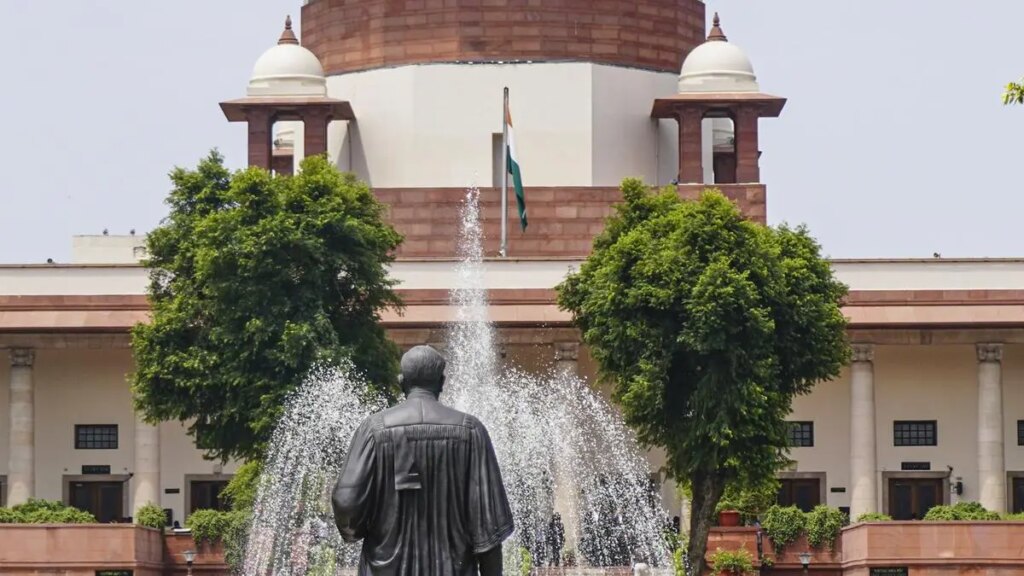
The Supreme Court on Tuesday said “mistakes” may have happened in the preparation of the draft Bihar electoral roll and pointed to Election Commission of India’s willingness to correct them while petitioners reminded the court of its promise to step in if the Special Intensive Revision (SIR) led to “mass exclusion” of electors from the preliminary voters’ list published on August 1.
Appearing before a Bench of Justices Surya Kant and Joymalya Bagchi on the first day of hearing the challenge to the Bihar SIR, senior advocate Gopal Sankaranaryanan said, “My Lords promised you would step in if there was a mass exclusion. This has happened! Sixty-five lakh people have been excluded”.
Senior advocate Rakesh Dwivedi, appearing for the Election Commission of India (ECI), said errors were bound to occur “here and there”. “This is a draft roll. It can be corrected by the Booth Level Officers,” he reasoned.
Senior advocate Kapil Sibal, who led the petitioners’ side, said “in a small constituency, 12 people left out as dead were found alive”.
Dwivedi said the petitioners were more keen to be an “obstruction” and indulge in speculation.
Justice Kant asked Sibal whether the petitioners wanted a “roving inquiry”, and on whose behest.
“If there are people genuinely aggrieved, please give a list of their names to us. We will take action,” Justice Kant addressed Sibal.
Sibal said a larger part of the population of Bihar were poor. They would have none of the documents sought by the ECI for verification of citizenship to be included in the electoral roll.
Senior advocate AM Singhvi, also for the petitioners, submitted that many records would have been lost due to floods or migration or other reasons. Most of the population of Bihar does not have their documents in a digital form.
“Determination of citizenship is not the role of ECI. If crores of people in Bihar are already on the electoral roll, the poll body cannot ask them to produce documents to prove their citizenship again. This amounts to presumptive exclusion,” Mr. Singhvi argued.
Sibal submitted that only 3.05 per cent of people in Bihar had birth certificates, one of the 11 ‘indicative’ documents required by the ECI.
But Justice Kant dismissed the submission, saying, “Bihar is a part of India. If people in Bihar do not have these documents, other States would also not have… These are documents that show a person is a bona fide resident of a State. Once you show the documents, the burden will shift to the ECI, Justice Kant observed. The judge urged Sibal not to make “sweeping statements”.
Justice Kant further said 87 per cent of Bihar had Aadhaar and the Electors Photo Identity Cards (EPIC). They could be used as proof, though not conclusive, of citizenship. The court said those who were part of the Bihar electoral roll in 2003, when the previous intensive revision happened, need not produce documents to be included in the current draft roll.
“On a conservative estimate, 6.5 crore electors need not produce any documents as they are already in the 2003 electoral roll,” Dwivedi chipped in.
But Justice Kant did ask about the need for an SIR now, when a summary revision of the Bihar electoral roll had happened as recently as January 2025.
Activist Yogendra Yadav, who appeared in person, said SIR across the world has been found to be counter-productive. He said whenever the onus to be included in the electoral roll shifted from the state to the citizens, a quarter of the population, mostly the marginal and the poor, tend to get excluded.
Yadav said the current SIR and the 2003 intensive revision in the Bihar voters’ list could not be compared. The latter happened at a time when computers were introduced in the election process.
“Records were being computerised. Printouts were given out to officers, who were asked to go from house to house to verify. The requirement to fill up the enumeration forms and this presumption of exclusion now are unique…. The Bihar SIR may be the largest disenfranchisement not only in the history of India, but of the world, in any democracy. This is not an issue of revision, but a tectonic shift in the burden to the voters,” he said.
Advocate Prashant Bhushan submitted that the ECI has the exact number of persons deleted from the draft roll and the reasons – death, traceability, duplication and permanently shifted the State – for their exclusion. However, they are not sharing the details. Many enumeration forms of deleted persons showed ‘BLOs have not recommended’ their names in the voters’ list without giving any further reason.
Published on August 12, 2025
[ad_2]
Source link