[ad_1]
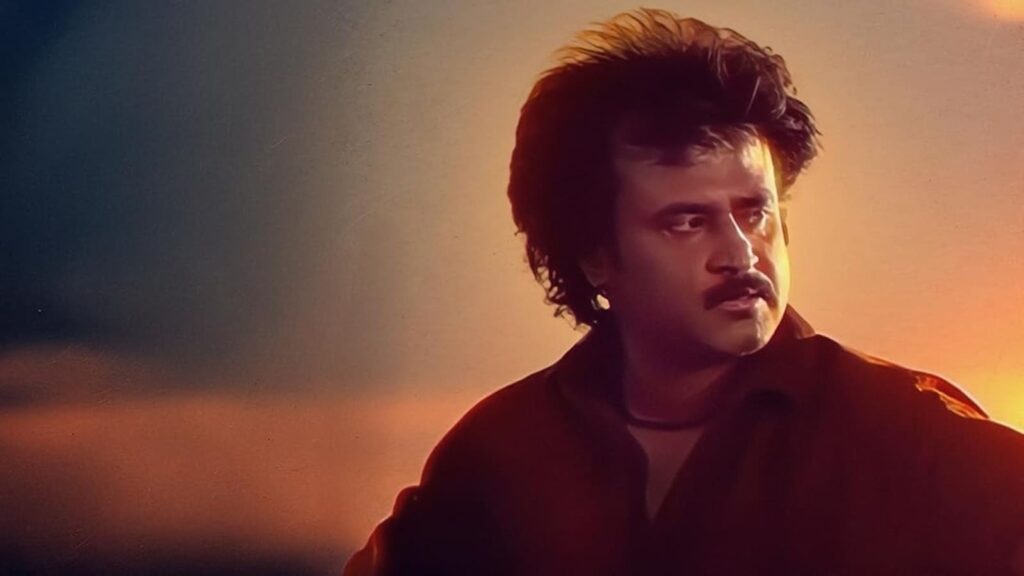
When Rajinikanth forayed into cinema, exactly 50 years ago today with K Balachander’s Apoorva Raagangal, he was not Thalaivar. The tag superstar was still a few years or so away from him. In fact, he was not even a hero. He was simply an actor, playing a flawed wife-beater, a character that evoked more derision than awe. To those who have grown up on Superstar Rajni, it may be hard to fathom, but the man was once known as a powerhouse performer – one that cinema lost at the altar of superstardom.

Rajinikanth’s first few roles were of a wife-beater, a rapist, and someone who murders his own friend. Not the resume an aspiring hero would want. But in all these roles (from Apoorva Raagangal, Katha Sangama, and Moondru Mudichu, respectively), Rajni earned praise. Critics called him impressive, dignified, and powerful. But Moondru Mudichu featured the beginnings of what would become ‘trademark Rajni’. In the love triangle, even though he played the villain (alongside Jaya Prada and Kamal Haasan), his cigarette-flipping style made him popular among the masses. Even as Rajinikanth continued to play negative and character roles, he longed for that love from the masses now.

It was Bairavi, the 1978 film, that launched him as a hero. A 35-feet cutout was erected outside cinema halls, and the sobriquet Superstar was invented. In the same year, Vanakkatukuriya Kathaliye had an intro song for him, something that would become the norm for years to come. In 1980 came Billa, the remake of Amitabh Bachchan’s Don, and Rajni’s superstardom was confirmed. Not only did he become the top star in Tamil cinema, displacing Kamal, he was sadly offered only stereotypical hero parts. The actor in him still managed to do justice to the roles. His performances in Thee (Deewar remake) and Moondru Mugam were praised. But filmmakers and audiences wanted to see Rajni only as a goon-beating, cigarette-flipping, monologue-sprouting star. The cast was set, and Rajni did not disappoint.

Even as he entered Bollywood with films like Andha Kanoon and Dosti Dushmani in the early 80s, his signature style followed him. The formula was simple. Rajni played an exaggerated version of his image, usually a cop or a righteous goon, but almost always a man of the masses. As the star was doing 10-12 movies a year, the scope for ‘performance’ diminished.
Then came Mani Ratnam. By the early 90s, Mani had developed a reputation for being one of the most promising Tamil filmmakers of his generation. Only a few years earlier, he had given Naayakan, arguably the finest Tamil film ever made, and one that brought out the best in Kamal Haasan. Mani partnered with Rajinikanth in 1991 for Thalapathi, a film inspired by the Mahabharat. Rajni played a character inspired by Karna, while Malayalam star Mammootty played his Duryodhana. A 20-year-old Arvind Swamy debuted as Arjuna. Thalapathi is considered one of the best films in Rajni’s career, and certainly his finest performance. Just as Shah Rukh Khan would do a decade later with Swades, Rajni dared to experiment with his image during the peak of his stardom.

This could have started a trend where Rajni experimented more. He did try to an extent with films like Veera, which was panned for its controversial climax. But the success of Mannan, Uzhaippali, and eventually Baashha meant that mass Rajni was what the audiences wanted. Baashha broke all box office records, turning the superstar into a demigod. And demigods do not experiment. They give their disciples what they want. With Muthu, Arunachalam, and Padayappa, he did just that. Superstar Rajni won, but Rajinikanth the actor took a back seat.
It did not help that his comeback in 2000s happened with Chandramukhi, an out-and-out commercial entertainer, built on the tropes that made Rajni popular. And Enthiran solidified that. Attempts at doing something different – like Pa Ranjith’s Kaala – did not land commercially, and the superstar was forced to toe the line again with 2.0 and Annaatthe.

In the last few years, Rajinikanth has found his niche, playing a veteran ‘former badass’. Be it Jailer, Vettaiyan, or Coolie, this trope has served him well. And yes, he is formulaic, he uses his aura to fill the screen. But every once in a while, in a particularly intense scene, you see that glimmer of vulnerability in his eyes, making his character human. That is what separates Rajni from other mass action stars. He makes his characters human, relatable, even if they are invulnerable. That comes from his foundation of performing, which box office pressures whittled away.
There is still hope that Rajni the performer will return to the screen in a big way some day. Till then, we will take what we can get.
[ad_2]
Source link