[ad_1]
Abstract
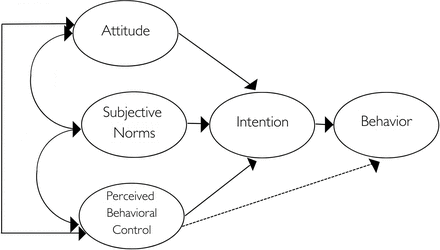
Objectives This study explored attitudes, subjective norms, and perceived behavioural control of participants across urban, rural and remote settings and examined intention-to-use telemedicine (defined in this study as remote patient–clinician consultations) during the COVID-19 pandemic.
Methods This is a cross-sectional study. 12 focus group discussions were conducted with 60 diverse telemedicine user and non-user participants across 3 study settings. Analysis of responses was done to understand the attitudes, norms and perceived behavioural control of participants. This explored the relationship between the aforementioned factors and intention to use.
Results Both users and non-users of telemedicine relayed that the benefits of telemedicine include protection from COVID-19 exposure, decreased out-of-pocket expenses and better work–life balance. Both groups also relayed perceived barriers to telemedicine. Users from the urban site relayed that the lack of preferred physicians discouraged use. Users from the rural and remote sites were concerned about spending on resources (ie, compatible smartphones) to access telemedicine. Non-users from all three sites mentioned that they would not try telemedicine if they felt overwhelmed prior to access.
Discussion First-hand experiences, peer promotions, and maximising resource support instil hope that telemedicine can help people gain more access to healthcare. However, utilisation will remain low if patients feel overwhelmed by the behavioural modifications and material resources needed to access telemedicine. Boosting infrastructure must come with improving confidence and trust among people.
Conclusion Sustainable access beyond the pandemic requires an understanding of factors that prevent usage. Sufficient investment in infrastructure and other related resources is needed if telemedicine will be used to address inequities in healthcare access, especially in rural and remote areas.
Limitations
Different subpopulations have unique healthcare experiences. This study explored geography and age as factors that can influence the decision to use. Other factors such as sex, socioeconomic status and computer literacy can impact individuals’ experience of telemedicine. Thus, the results of this study may not be representative of the general Philippine population.
The study participants’ attitudes and perspectives towards telemedicine may have also been affected by their recall ability, with perceptions potentially being modified by the passage of time. Future researchers are encouraged to narrow down usage from 3 to 6 months to gain fresh insight.
Conclusion
With the advent of the COVID-19 pandemic, telemedicine resurfaces as a potential avenue through which healthcare can remain accessible. It was not seen as a long-term staple for healthcare services, primarily due to technological hesitancy and inadequacy of resources. This suggests that there is work to be done to upscale the usage and acceptance of telemedicine services beyond the pandemic.
This study provides a comparative analysis of the personal and infrastructural factors that may affect telemedicine utilisation among urban, rural and remote localities in LMICs. Analysis of sentiments revealed that the decision to use telemedicine services is largely contextual and socially informed. It adheres to the framework that all domains of behavioural intention affect a patient’s decision to use. People make decisions depending on their most recent beliefs about telemedicine, the feedback they receive from people around them, and the perceived availability of resources. Good feedback from trusted individuals and the availability of public infrastructure is likely to produce a positive impact on a person’s belief about the service.
This study provides an in-depth analysis of how policy-makers can maximise resources to sustain utilisation of telemedicine beyond the pandemic and in anticipation of the universal healthcare implementation in the Philippines. Policy-makers must carefully assess all domains when crafting interventions. The need to create a telemedicine platform that is easy for caretakers and patients to navigate was a distinctive idea expressed by most participants. Healthcare advocates can improve technological infrastructure while making people confident about integrating technology into their healthcare routines.
[ad_2]
Source link