[ad_1]
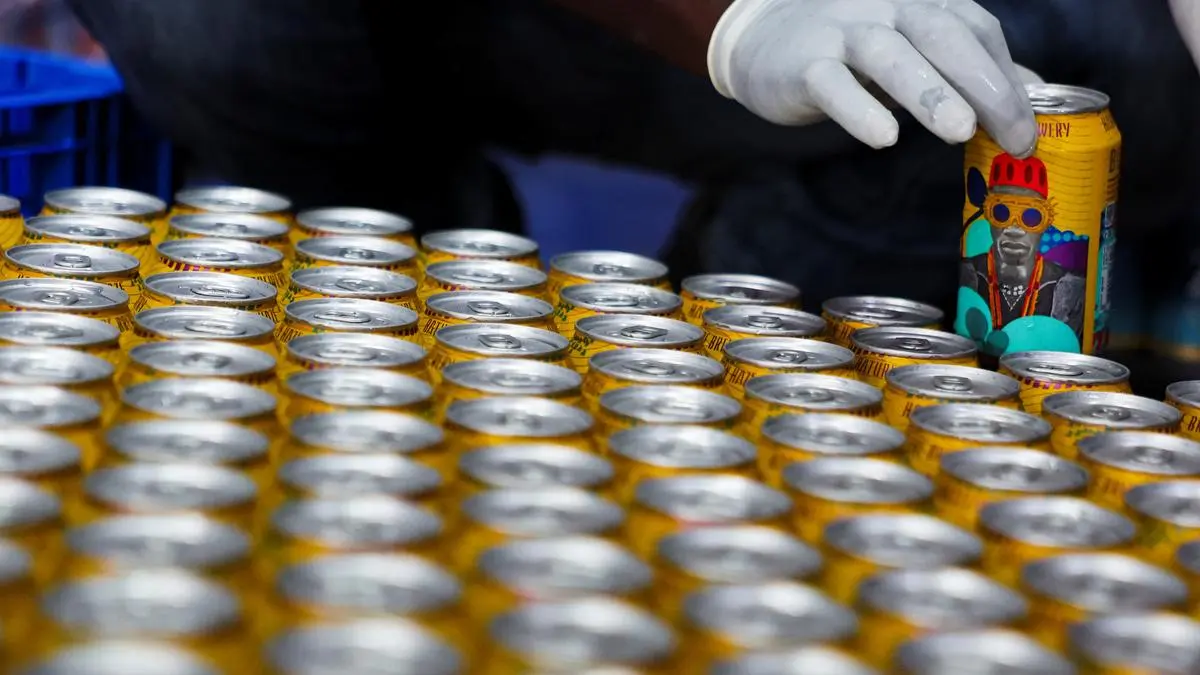
As beer can only be packaged in bottles or cans due to excise laws, brewers warn that the shortage may worsen without better planning.
| Photo Credit:
SODIQ ADELAKUN
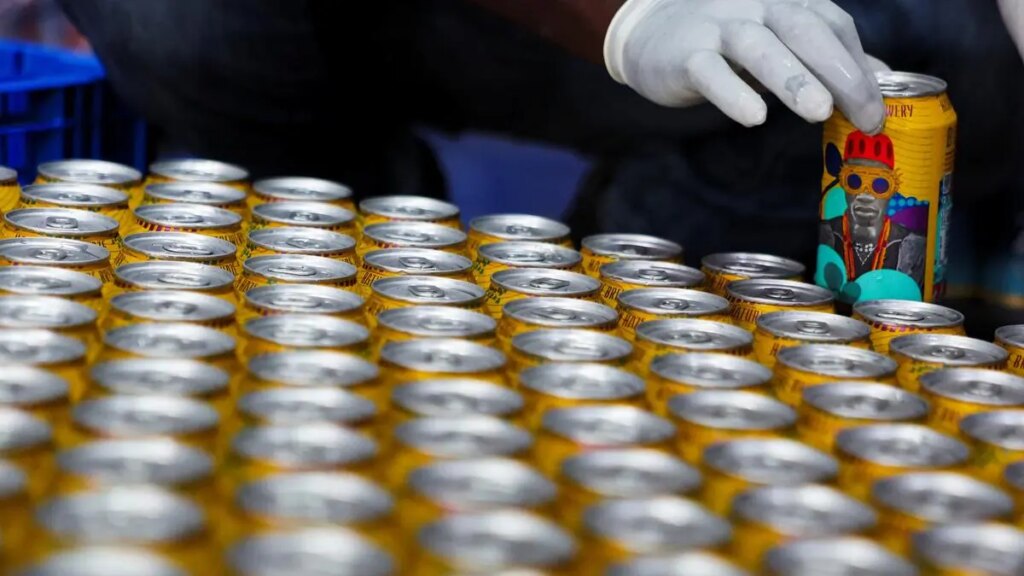
India’s beer industry is grappling with a deepening can shortage, driven by surging demand and competition from soft drink makers. With just three domestic can plants and all aluminium imported, production is falling short. New BIS certification rules for local and imported cans, enforced from April this year, have further strained supply, creating an annual deficit of 12–13 crore 500ml cans, or about 20 per cent of total demand.
As beer can only be packaged in bottles or cans due to excise laws, brewers warn that the shortage may worsen without better planning.
Vivek Gupta, MD & CEO of United Breweries (UBL), addressed the supply shortage during the company’s Q1 FY26 earnings call, noting that cans account for about 22 per cent of its overall business. In Uttar Pradesh, this SKU represents 75- 80 per cent of sales and continues to grow as a category.
“We are having stock-outs because of the shortage of cans. The backward integration in the Indian beer industry — whether for bottles or cans — needs work for the long term. We lost at least 1 to 2 points of growth because of a lack of cans over six months,” he shared.
Market projection
According to Persistence Market Research, the Indian aluminium beverage can market is projected to grow from around $0.4 billion in 2025 to nearly $0.8 billion by 2032. But India currently has only three can manufacturing units, two owned by international players, Canpack and Ball.
According to Prem Dewan, Chairman and MD of Devans Modern Breweries, the makers of Godfather Beer, manufacturers could not bridge the spurt in the can requirement this year. Demand has increased in States like UP due to positive changes in the excise policy. This, coupled with the increased demand from the soft drink manufacturers, has resulted in huge shortages.
He shared that aluminium used for cans is imported as the gauge required is not manufactured within the country. While there is no shortage of aluminium, production capacity has not kept pace with demand.
“Backward integration by investing in can manufacturing would be a big no-no. Manufacturing requires high investment and is best left to the experts. Two new can manufacturing units are expected to be commissioned by the end of 2026. However, the requirement would have further increased, and I see no respite due to increased capacity,” he said.
In India, rising demand from top brewers has worsened global disruptions, sidelining smaller and craft brands, noted Ishwaraj Singh Bhatia, Co-founder & COO, Simba Beer & ZigZag Vodka.
“Can SKUs drive a significant share of our off-premise and Q‑commerce revenues. We’ve partnered with local can suppliers to ensure availability, even if at a higher cost. We are also exploring the distribution of kegs in select markets like Maharashtra and Goa,” he said, adding Simba Beers is likely to expand its bottle formats to manage supply volatility.
BIS norms
Earlier this year, the BIS declared that Quality Control Orders (QCOs) are mandatory regulations to meet national quality standards. This includes a mandatory BIS certification on aluminium cans for beverages, effective April 1, 2025.
Vinod Giri, the Director General of Brewers Association of India (BAI), shared that getting a BIS certification takes time and requires a visit to the plant factory abroad.
“International suppliers like Ball or Canpack cannot ship here until they receive BIS certification. So even if one can import from outside, they can’t use it.” He added that players who applied last year have yet to receive certification.
To mitigate this, the BAI has recommended that the government either push the certification requirement to April 1, 2026, or restrict it to cans produced domestically, excepting imported cans. Alongside, BAI recommended that those who have applied for certification should be allowed to supply.
“In some States, cans are the most dominant form. In our letter to the authorities, we pointed out that state governments will lose about ₹1,200-1,300 crore because of lower sales,” he noted.
Published on August 1, 2025
[ad_2]
Source link