[ad_1]
Thirty-five km from Thanjavur, on the banks of a tributary of river Cauvery, is the town of Swamimalai. It is here, over 2,000 years ago during the Chola reign, that bronze sculptures began to be made.
During a visit to the town, we make it a point to go to Shri Rajan Industries, makers of bronze idols as per shilpa shastra, who also organise workshops on bronze casting and run a school to train young enthusiasts in the craft. As you enter the premises, you are greeted by sculpted masterpieces and work-in-progress statues of Hindu deities.
Swamimalai in Tamil Nadu is famous for this craft, which originated in the seventh Century. It is said to have flourished under the patronage of “Sembiyan Mahadevi, wife of Gandaraditya Chola (949 CE to 957 CE),” says Suresh Kumar, manager, Shri Rajan Industries.
The workshop and school were earlier managed by founder Suresh Rajan — a native of Kerala, who learnt bronze casting at the government-affiliated Art and Metal Society in Swamimalai at the age of 24. “I was very young when I developed a passion for sculpting,” says the now 71-year-old Suresh.
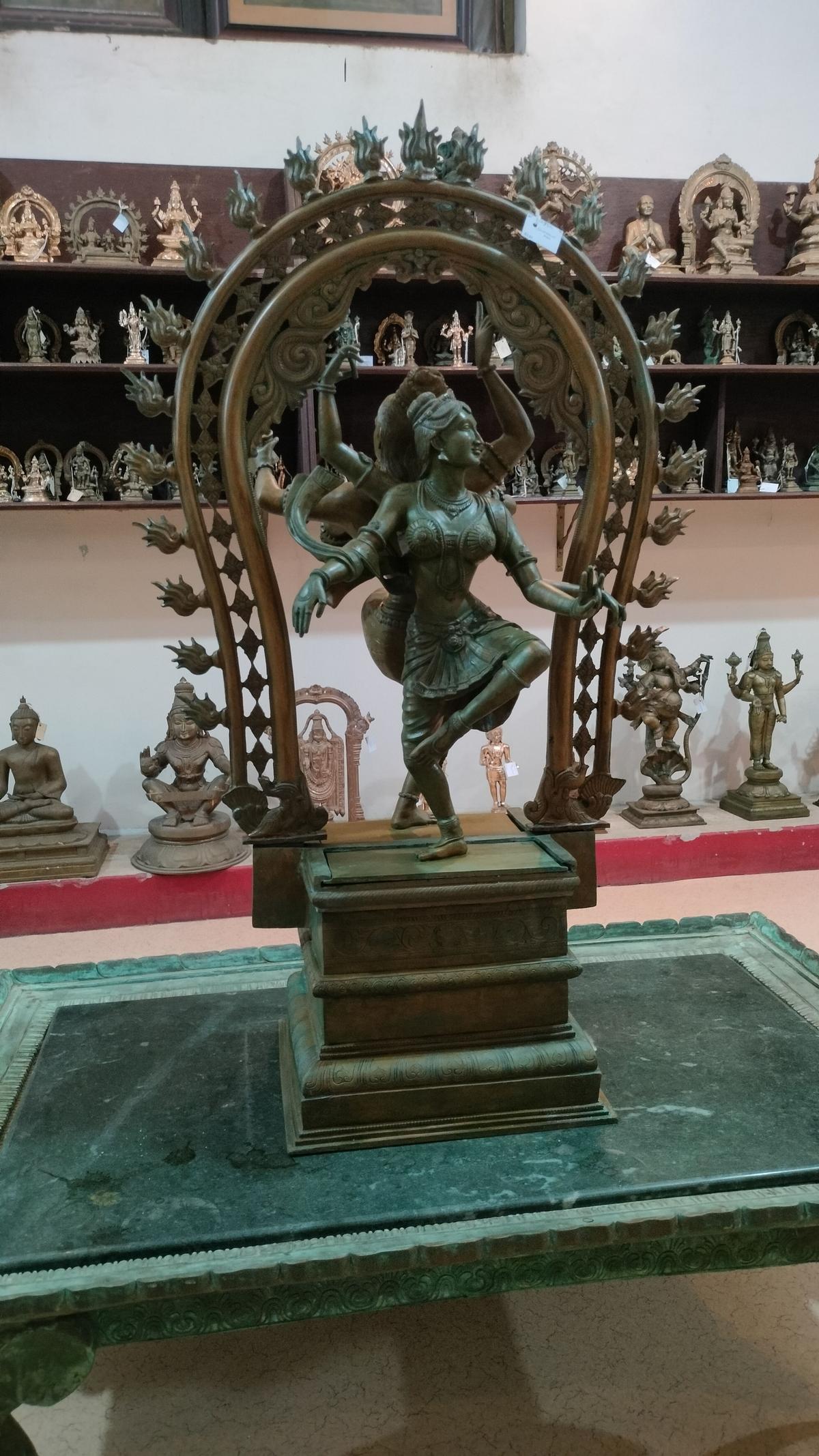
The idols are chiselled to perfection
| Photo Credit:
Special Arrangement
The craftsmen are referred to as Sthapathis and belong to the Viswakarma community. They settled in this temple town when they discovered that the rich alluvial soil with high clay content, found on the banks of the Cauvery, was ideal for making bronze sculptures. Since the craft was passed down generations, Swamimalai continues to be the bronze hub. “Currently, there are about 400 families practising this craft,” informs Suresh, who also tells us why Murugan is referred to as Swaminathaswamy in the town. “Because it is believed that Lord Murugan taught the meaning of the Pranava Mantra (Om) to his father, Lord Shiva, here.”
An expert in bronze casting, Suresh explaining the process says, “First, a clay on wax (a mixture of beeswax and resin) model is made, with an opening at the bottom. Melted metal — a mixture of 84 per cent copper, 14 per cent zinc and two per cent tin — is poured over the wax mould and set aside for a day for it to harden. This metal cast is then treated to heat, so that the melted wax flows out. After this, the hollow cast is filled with an alloy of copper, zinc and tin. A day or two later, the mould is broken and the idol or sculpture is chiselled, filed and polished.”
Traditionally, panchaloha also included silver and gold, but due to soaring prices these metals are now used sparingly. “We add only when a customer tells us to. Sometimes, people donate their gold or silver jewellery,” says Suresh.
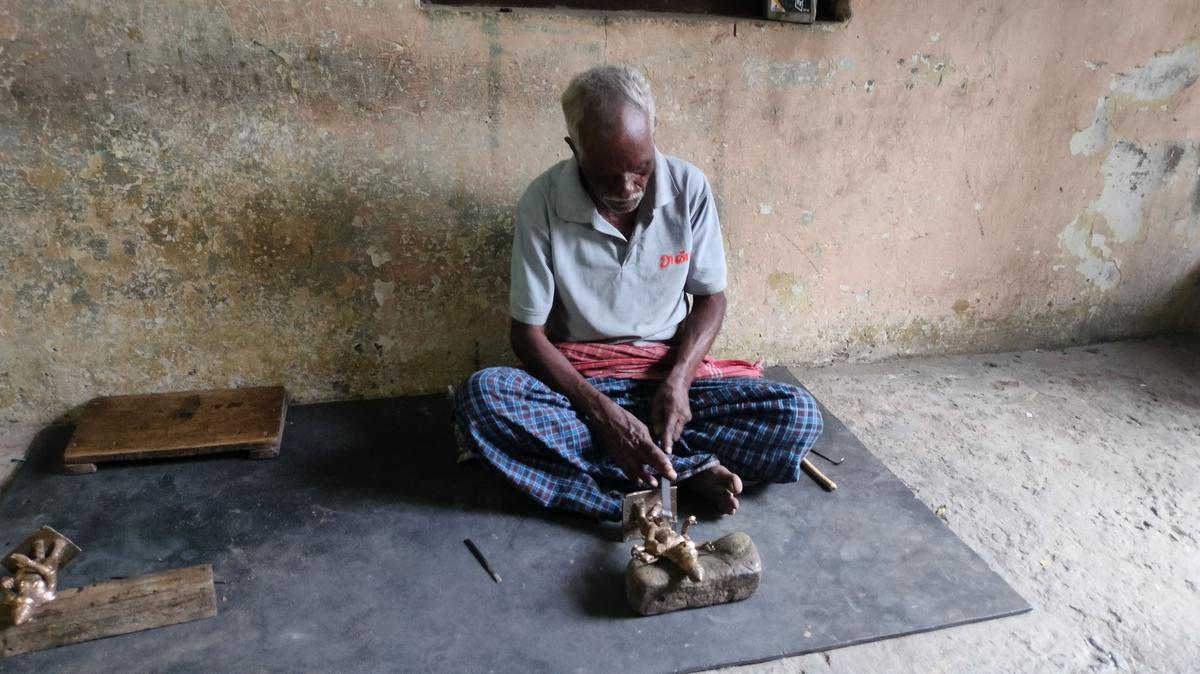
Currently there are 400 families in the village that practise this craft
| Photo Credit:
Special Arrangement
Every statue/idol comes with a story. Fifty-two-year-old Arul Jyothi, who has been a sculptor for 40 years, chiselling a nearly-complete idol of Parvathi, shares: “In this form, she is Bhoga Shakti. The goddess here is relaxed, and this is the position she assumes before entering the sanctum of Shiva.”
Praveen, aged 23, who joined the school about seven years ago, demonstrates how he shapes the malleable wax into a meditative mudra over a portable furnace. “During the Chola period, the bronze cast idols were used for processions and were called urchava or utsava murtis. They were taken from the temple to the streets on a chariot, often decorated with flowers, jewellery and silks, while people thronged the streets to seek blessings during the procession. This is still followed in many temples across South India,” adds Suresh.
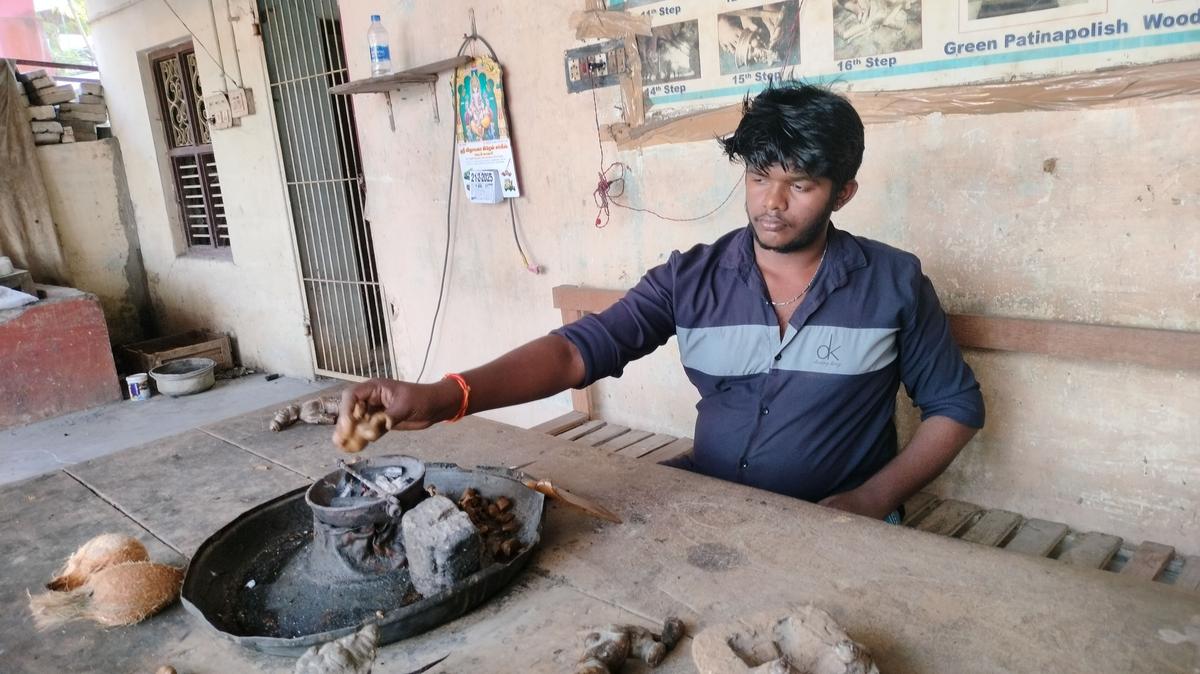
Praveen has been with the school for seven years (can we check if that is the boy in the pic )
| Photo Credit:
Special Arrangement
Detailing is key when it comes to wax bronze casting. “The sthapathis can see the shape of the eyes, detail of the mudras, delicate folds of the garment and designs of the jewellery — all coming to life in the idols. Each idol or statue is unique, as we make only one from each mould,” says Kumar.
When the pandemic hit, the idol-makers sought other jobs and the vocation lost skilled craftspersons. According to Suresh Kumar, the craft is a fusion of spirituality and science, and a panchaloha idol is a harbinger of positive vibes. Hence, it is important to save the craft from becoming extinct.
According to Rajan, few people have been coming to learn the GI-tagged craft. “Indians do not appreciate it, but Westerners do. So do NRIs or VVIPs. The local consumer is still on the lookout for mass-produced bronze idols, which lack the beauty and fine detailing of the ones we make,” he says.
Published – July 19, 2025 12:48 pm IST
[ad_2]
Source link