[ad_1]
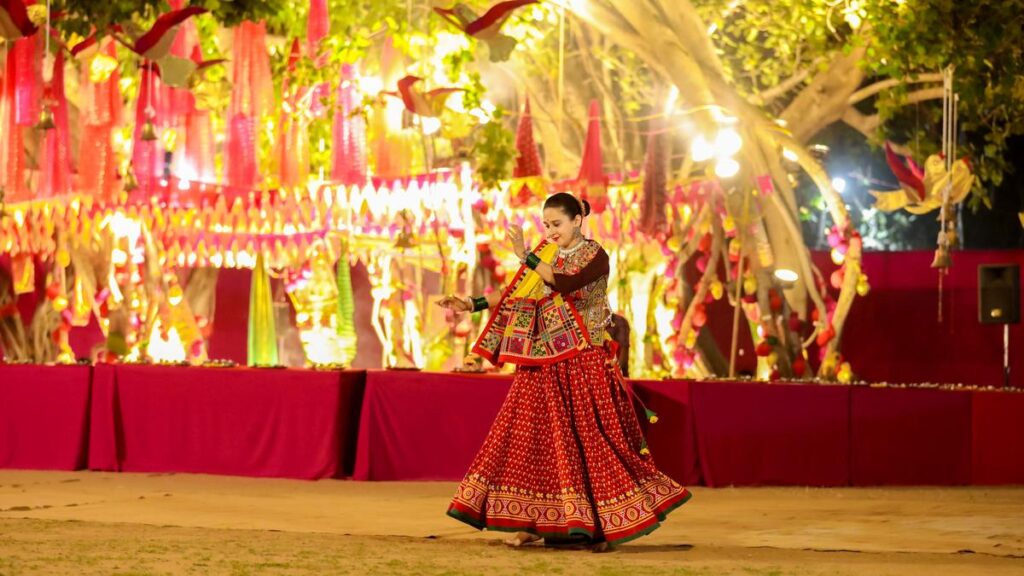
On the sprawling green lawns of Vadodara’s iconic Lukshmi Vilas Palace (residence of the Vadodara’s royal family), Rutvij Mistry, dressed as Radha, dances with abandon. He is immersed in the all-pervading feminine energy of the Navratri at Luxmi Vilas Palace Heritage Garba (LVP Heritage Garba) — where tradition comes alive.
Every year, Radhikaraje Gaekwad of the erstwhile royal family of Baroda, opens the palace gates to people of all faiths and genders to participate in the garba. It’s a celebration of Gujarat’s sacred dance while embracing inclusivity as Radhikaraje is an advocate for women’s rights and the LGBTQ+ community.
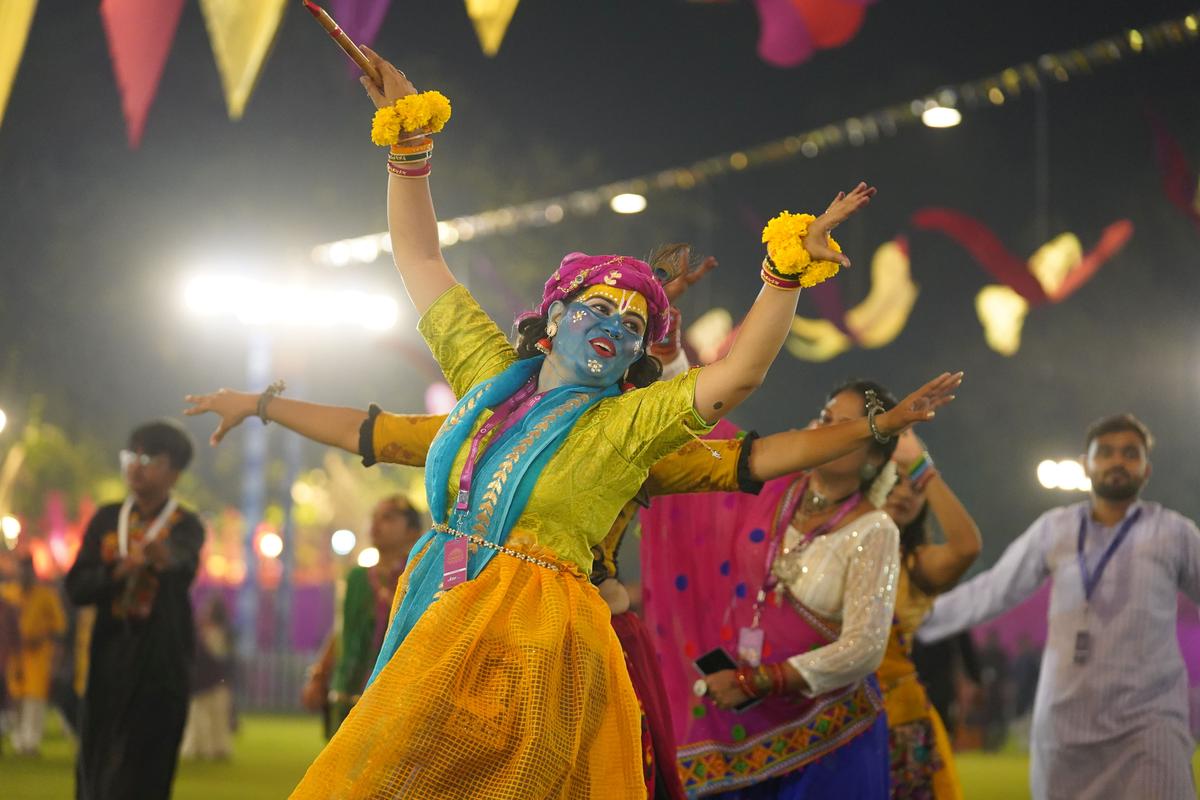
The Maharani opens the palace gates to people of all faiths and genders.
| Photo Credit:
Special Arrangement
“The idea of making garba inclusive after my COVID relief work when I connected with the LGBTQ+ community. That led me to bring them into a larger space such as garba, one of Vadodara’s most joyous occasions, where they could truly belong,” says Radhikaraje over the phone from Vadodara. A heritage conservationist and textile revivalist, Radhikaraje also runs Gazra Cafe at the historical building of the Maharani Chimnabai Stree Udyogalay (MCSU). The cafe is led by the queer community and offers rare Maharashtrian and Gujarati dishes.
Rutvij Mistry, a professor at the Fine Arts college of M.S. University, Vadodara, agrees. “The LGBTQ+ community can dance without fear or judgment here,” he says. Bharatanatyam artiste Narthaki Natraj, performer Rani Ko-HE-Nurand others have sung and twirled in circles along with people on these grounds.
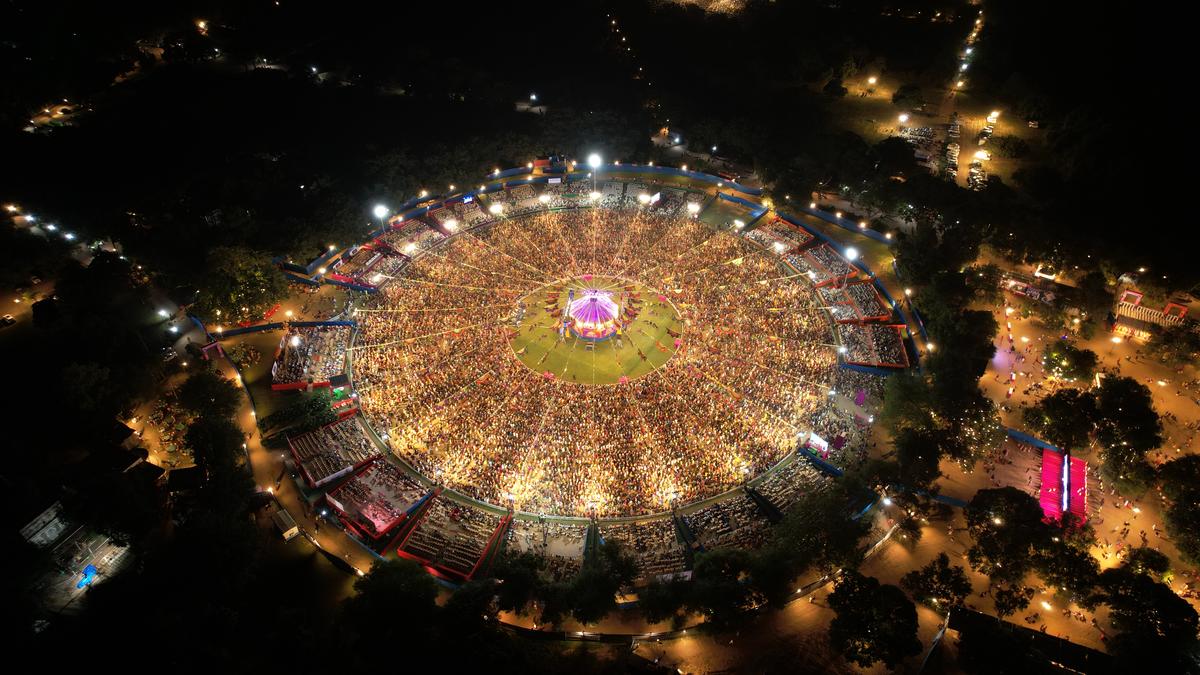
The singers and musicians occupy the centre of the ground during garba.
| Photo Credit:
Courtesy: LVP Heritage Garba
The community also operates a temple on the premises. Says Radhikaraje, “It’s not a stereotypical temple. We have an ancient tree, named Bolto Ambo. We decorate it with bangles, clothes, coconut and a Devi painting done by my father-in-law, Maharaja Ranjitsinh Gaekwad. The soul of the garba lies here. The LGBTQI community does the seva and offers prasad. By placing them at the heart of this sacred space, we hope society too learns to see them with the same respect and inclusion,” adds Radhikaraje.
Rutvij, who is one of the brand ambassadors of the LVP Heritage Garba, says the all the nine days of Navaratri are sacrosanct for him. At the palace grounds, he surrenders to Shakti while dancing in that labyrinth or the circle of life. “We have reduced the competitive element, as people should just dance for peace and happiness,” he emphasises.
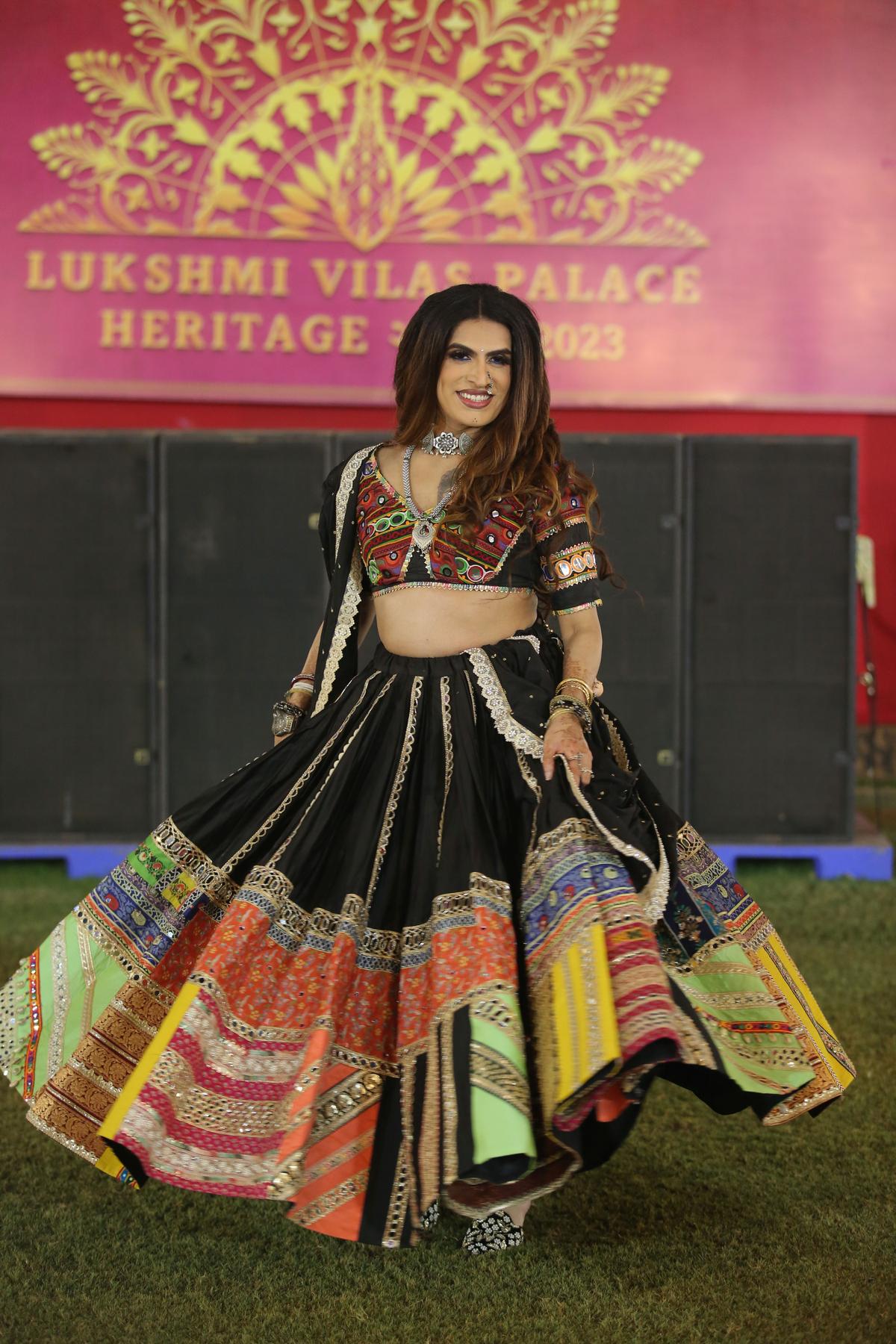
The LGBTQ+ community is a significant part of the celebration. Performer Rani Ko-HE-Nur has been a regular
| Photo Credit:
Special Arrangement
Vadodara garba is different from the way it is performed in Ahmedabad and Surat. It is more traditional and does not use Bollywood music. It is performed barefoot on grass to live music. The singers and musicians are positioned right in the centre of the ground. The songs are chosen by the Radhikaraje herself. “All our songs celebrate the feminine-divine, the Raas and Krishna Leela. I’ve also revived garbas written over a century ago, verses that praise Baroda, its people and their bond with the Maharaja. These rare, forgotten garbas connect us to the city’s cultural memory and pride,” she says.
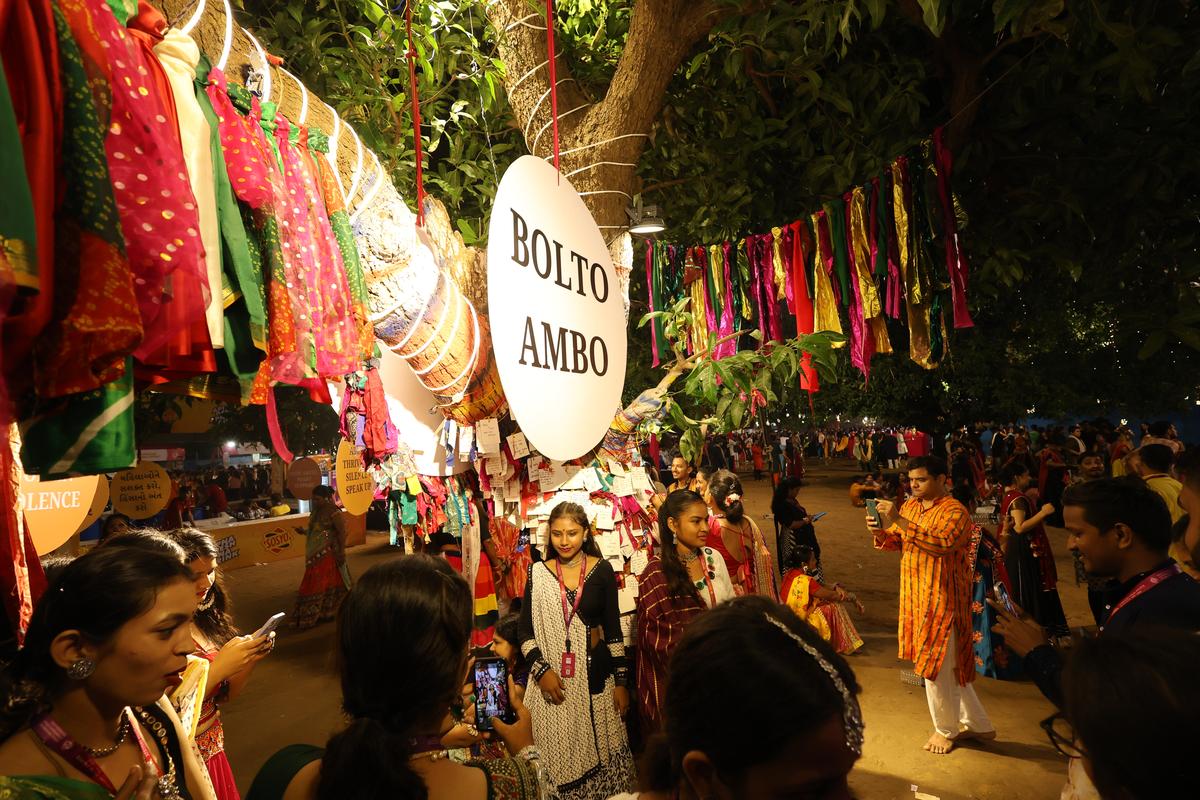
The Bolto Ambo tree
| Photo Credit:
Courtesy: LVP Heritage Garba
This year, singers Ashita and Sachin Limaye, have been invited to sing traditional Gujarati Raas-Garba and bhakti songs. An all-women dhol-tasha group from Maharashtra is another highlight along with Navdurga paintings by artists from Odisha . .
Garba has been more than just song and dance. Each street in the neighbourhood, called ‘sheris’ in Gujarati, sports festive ambience by bringing people together. “Historically, the songs carried powerful messages and we have continued that by addressing issues such as women’s safety and inclusion of the trans community. Today, our garba has become a space where the queer community can participate with pride,” shares Radhikaraje.
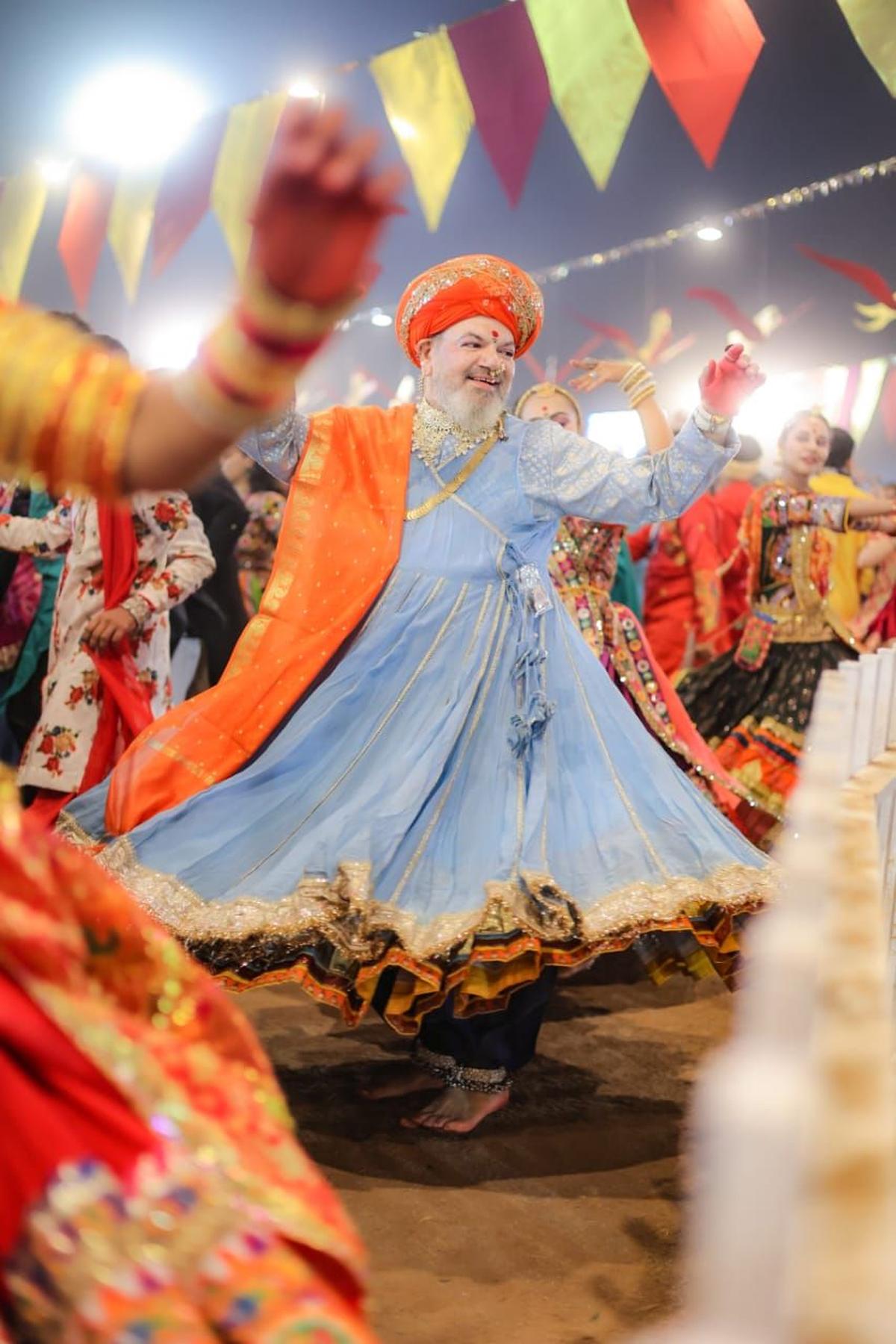
Rutvij Mistry
| Photo Credit:
Special Arrangement
LVP Heritage Garba has a different theme each year. “Last year, it focused on violence against women, and this year, we are talking about the ideal world for a woman. We use this space and occasion to go deeper within ourselves, and be able to ask difficult questions and seek answers. So Bolto Ambo has become a movement and people write their messages on it,” explains Radhikaraje.
Radhikaraje feels that when participants dress up in kediyus and chaniya cholis, they not only display the colours of the festival but also convey the power of garba in uniting people.”
(The LVP Heritage Garba is on till October 1, (8 p.m. onwards). Passes available on bookmyshow)
Published – September 23, 2025 04:12 pm IST
[ad_2]
Source link