[ad_1]
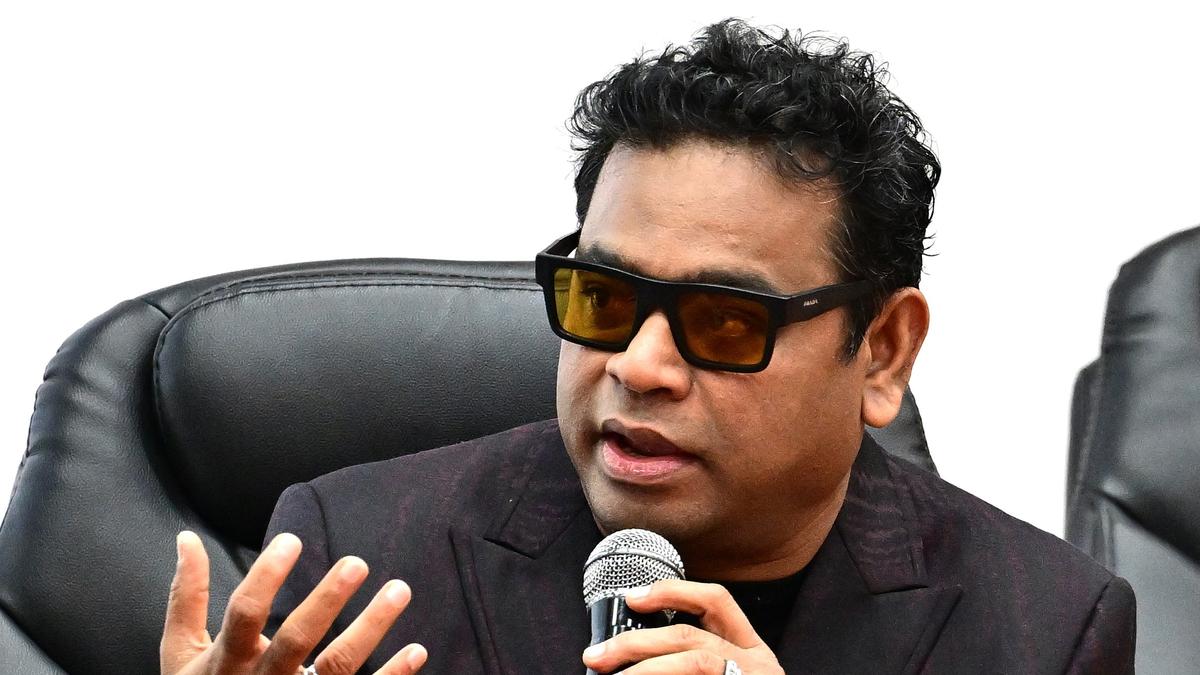
File picture of music composer A.R. Rahman
| Photo Credit: B. Velankanni Raj
The Delhi High Court on Wednesday (September 24, 2025) set aside its April order against music composer A.R. Rahman in a copyright infringement case concerning the song “Veera Raja Veera” from the 2023 film Ponniyin Selvan-2.
The April 25, 2025 order had directed Mr. Rahman and the film’s co-producers — Madras Talkies and Lyca Productions — to deposit ₹2 crore with the court registry, revise the credits on digital platforms, and pay costs to classical vocalist and Padma Shri awardee Ustad Faiyaz Wasifuddin Dagar.
Central to the case was whether the late Junior Dagar Brothers — Ustad N. Faiyazuddin Dagar and Ustad Zahiruddin Dagar — could be considered the exclusive authors of “Shiva Stuti”, a Dhrupad composition.
A Bench of Justices C. Hari Shankar and Om Prakash Shukla observed that the claim of exclusive authorship over the composition “Shiva Stuti”, allegedly copied in “Veera Raja Veera”, could not be sustained.
“As the claim of authorship is rejected, there is no requirement to go into the other aspects of originality or infringement,” the court said.
In the 93-page verdict, the court underscored the complexity of applying copyright law to classical music traditions.
“The facts and circumstances of the present case bring to fore the intricate task of applying modern copyright principles, rooted in individualisation, to traditional heritage art forms that have evolved collectively over centuries, for which the privilege of copyright protection may not be available,” the court observed.
The court also noted that several branches of the Dagar family, including the Gundecha Brothers and their disciples, had publicly performed identical compositions without exclusive attribution.
“This demonstrates that the suit composition has been preserved and disseminated across generations within the Dagarvani tradition, across the Dagar family and their disciples,” it remarked.
The court said allowing monopolisation of such composition “would adversely affect how young musicians learn Indian classical music and share compositions while training”.
The court’s ruling, delivered on Mr. Rahman’s appeal, set aside the April order’s findings of infringement and financial liability against him.
According to Mr. Dagar, the “Shiva Stuti” composition was created by his father and uncle, known as the Junior Dagar Brothers, sometime in the 1970s. He claimed that following their deaths in 1989 and 1994 respectively, the copyright passed to him through an oral family settlement among the legal heirs.
Mr. Dagar further alleged that the composition was shared with Mr. Rahman without his knowledge or authorisation and was subsequently used in the film’s soundtrack without appropriate credit.
Published – September 24, 2025 12:28 pm IST
[ad_2]
Source link