[ad_1]
A unique beginning is often essential to the making of a superhero. For Batman, it was witnessing a murder in the alleys of Gotham, for Spiderman it was getting bitten by a radioactive spider. For Pushpamala N’s Phantom Lady, it was walking on the hallowed grounds of what was to be Mannat, the now widely popular residence of superstar Shah Rukh Khan. In hindsight, it was meant to be. Pushpamala had always been a big film buff.
Inspired by Fearless Nadia’s ‘Hunterwali’ look, she created the Phantom Lady or Kismet for the first time in 1996 – dressing up in a black mask, cape and a hat – for a photograph meant for submission to a film festival. “It was supposed to be one photograph,” she says during a telephonic interview. Pushpamala never sent in the submission but as she looked at the photographs clicked at SRK’s bungalow, then known as Villa Vienna, she knew she “wanted to expand this and make it into an exhibition”. Finally, she created a photo-romance series with 25 black-and-white photos, shot across different locations in Mumbai.

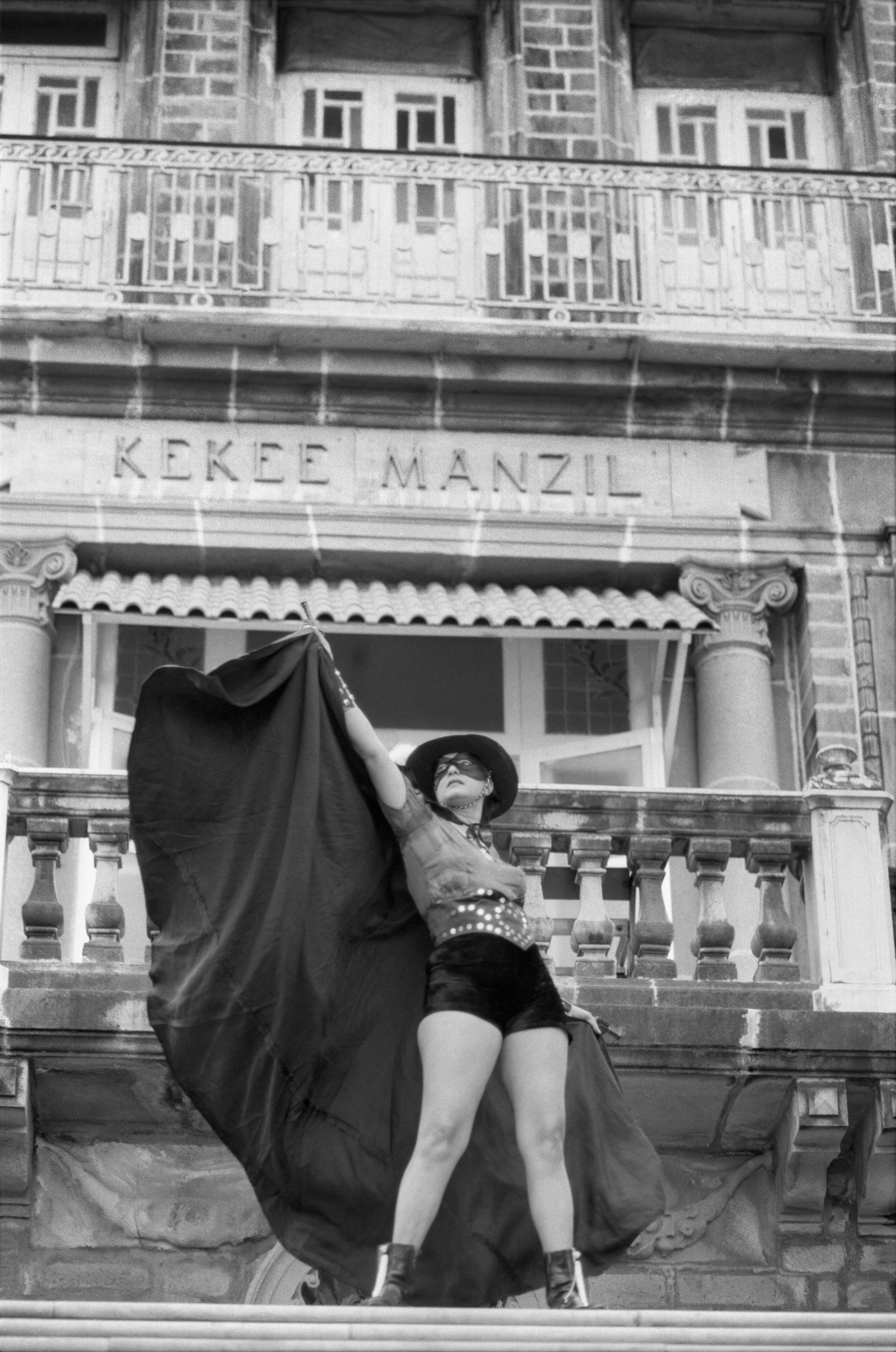 The Phantom Lady in front of Kekee Manzil in Mumbai
In the three decades since, the Phantom Lady has travelled to many places, including the Tate Modern in London, Centre Pompidou in Paris, National Gallery of Modern Art in New Delhi and the Kochi-Muziris Biennale. Her most recent haunt was the Chanel Nexus Hall in Tokyo, Japan, as part of her first ever solo in the country, ‘Dressing Up’ (June 27-August 17), following a showcase of her works ‘Mother India’, ‘Avega—The Passion’ and ‘The Arrival of Vasco da Gama’ earlier this year at Kyotographie 2025 in Kyoto.
Pushpamala N began her 40-year-long career with sculpture and then ventured into photography. The element of performance though has been key to her practice in both mediums, as has been the theme of identity. Although, that is not how she prefers her work to be categorised. “I hate the word identity. Identity politics has very much to do with oppression and I can’t really claim to be oppressed. I’m a mainstream privileged person and I don’t want to talk about my identity,” says the 69-year-old artist, clarifying, “My work is feminist. It’s also much more than that because I’m talking about the idea of the nation, citizenship, history, memory. So they’re all political in a sense but in different ways. Some of them obviously so and some in a more subtle way.”
She revisited the character of the Phantom Lady in 2012 with the series ‘The Return of the Phantom Lady’, a set of 21 –this time colour – photographs. Pushpamala’s feminist approach is embodied by her classic film noir heroine and her rendezvous with the city.
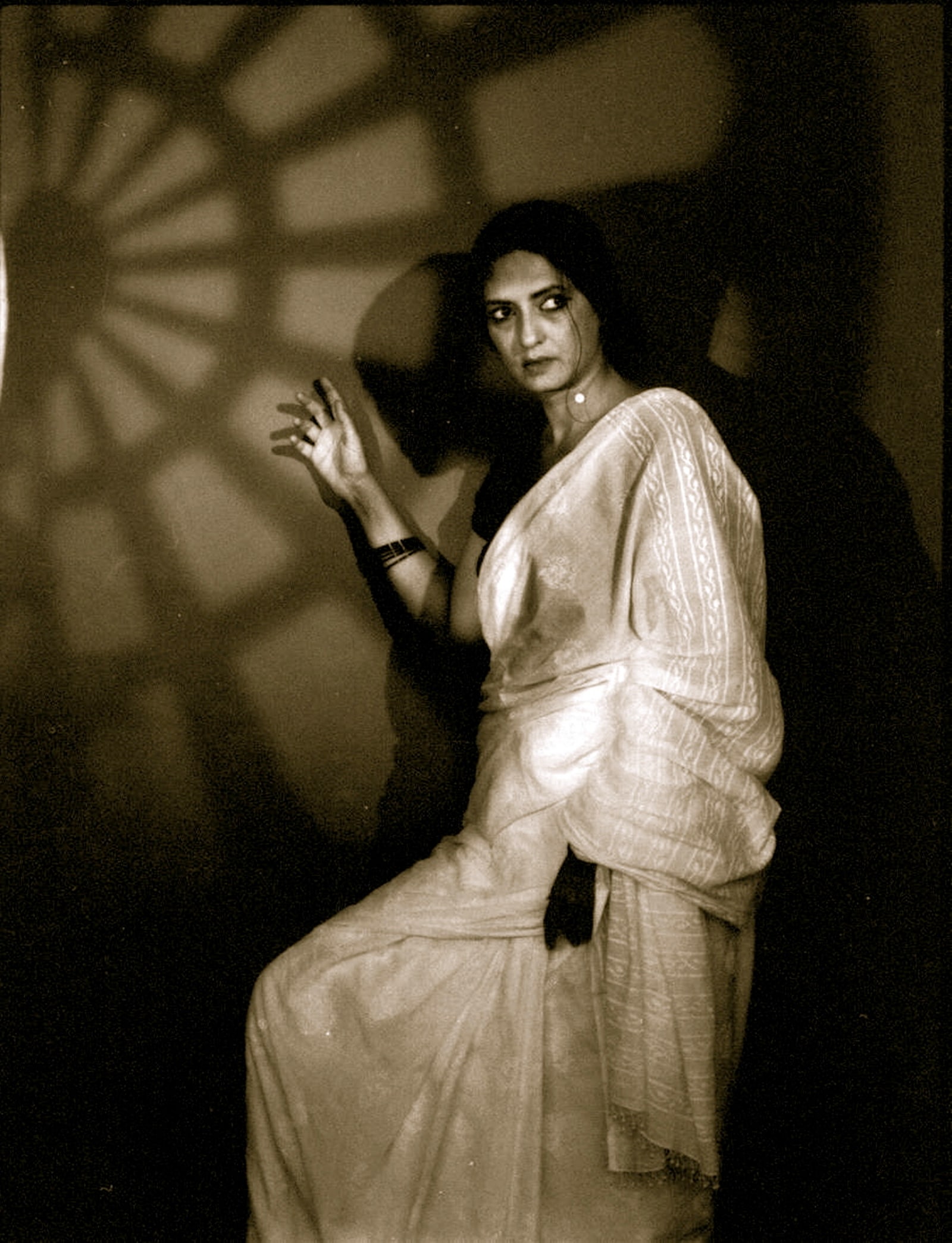 Bhayanaka Rasa, The Navarasa Suite
Her photo-romance harks back to the 19th-century metaphor of ‘whore’ for a city. Pushpamala plays up the irony of how women are unsafe in the cities they live in, by making the Phantom Lady reclaim that very space as she moves around the city without any hesitation. “The woman has no access to the city but you see the Phantom Lady roaming about wearing shorts all through the night. But the city also gives freedom… when you come from a small place the city gives you so much freedom,” says the Bengaluru-based artist, adding, “So it’s really about the woman and the city and the man is the antagonist.”
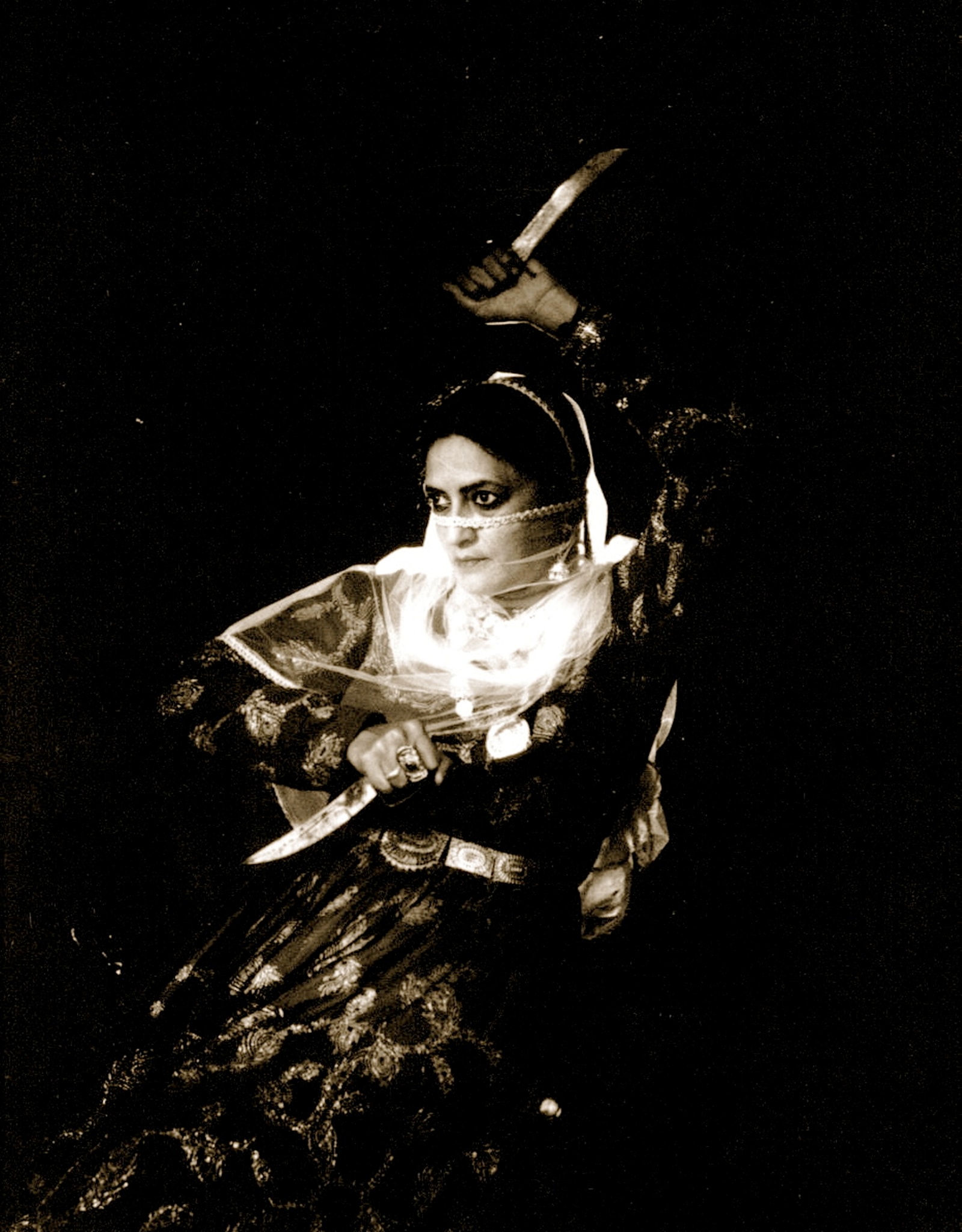 Raudra Rasa, The Navarasa Suite
Besides the two ‘Phantom Lady’ series, the exhibition also featured ‘The Navarasa Suite’, capturing the artist portraying the nine emotions according to the Indian aesthetic theory as a quintessential yesteryear Bollywood actress. Work and play always went hand in hand for Pushpamala.
[ad_2]
Source link